Not cassia
Ceylon cinnamon is Cinnamomum verum. Cassia is a name used for other cinnamon species with a different structure, composition, and flavour profile.
Examine the distinction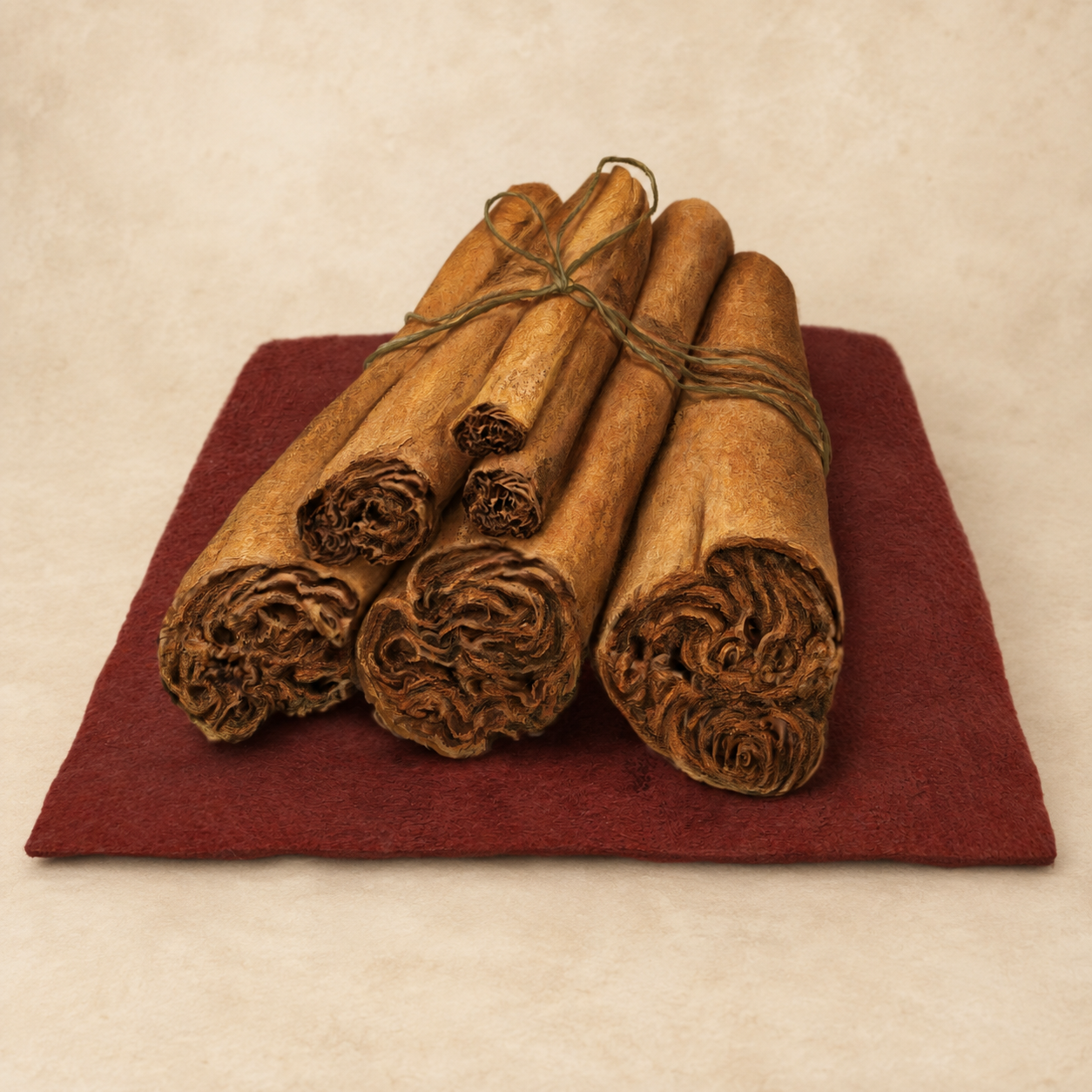
Ceylon · Sri Lanka
Ceylon cinnamon is not simply a finer version of common cinnamon. It is its own species, Cinnamomum verum, shaped into fine, many-layered quills and known for a gentle sweetness, lifted aroma, and quiet warmth.
Identity before grade
The name describes more than a flavour. It begins with species and origin, continues through the handling of the inner bark, and becomes visible in the architecture of the finished quill.
Ceylon cinnamon is Cinnamomum verum. Cassia is a name used for other cinnamon species with a different structure, composition, and flavour profile.
Examine the distinctionThin pieces of inner bark are carefully joined and rolled into a pale, layered quill. Cassia commonly forms a harder, darker, single curl.
The distinction is aromatic rather than merely mild: sweetness, citrus lift, and warmth without the blunt woody force commonly associated with cassia.
Ceylon Cinnamon received geographical indication recognition in 2022, connecting its name and reputation to Sri Lankan origin and standards.
Read the historyThe Merchant · House Selection
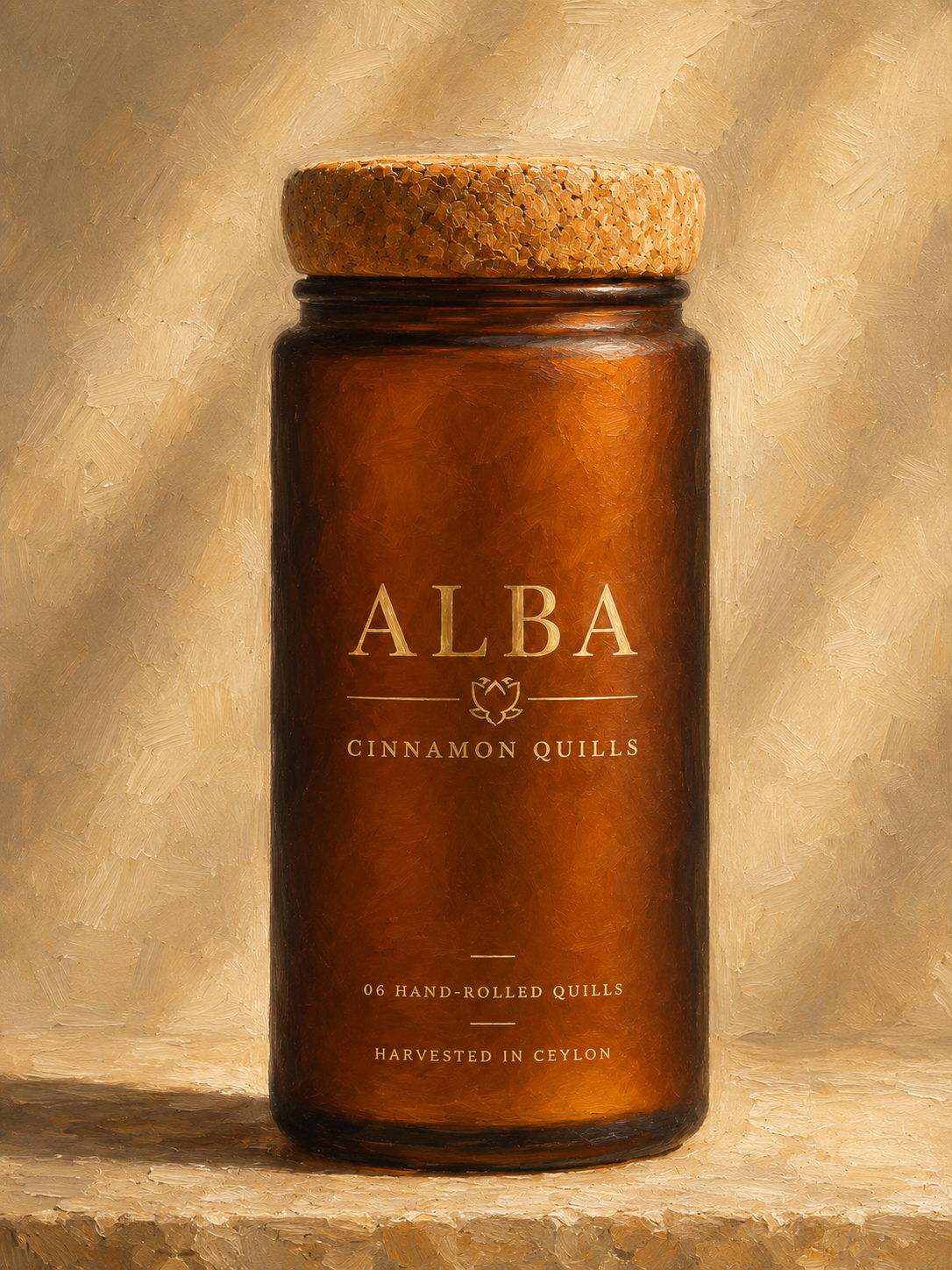
Grades describe the construction and appearance of a quill; they are not separate species. The Merchant presents Alba and regular C5 as two distinct expressions of Cinnamomum verum.
 Study 01 · Finest quill
≤ 6 mm
The most slender standard quill grade. Pale, tightly layered, and chosen when delicacy, sweetness, and refinement are the point.
Explore Alba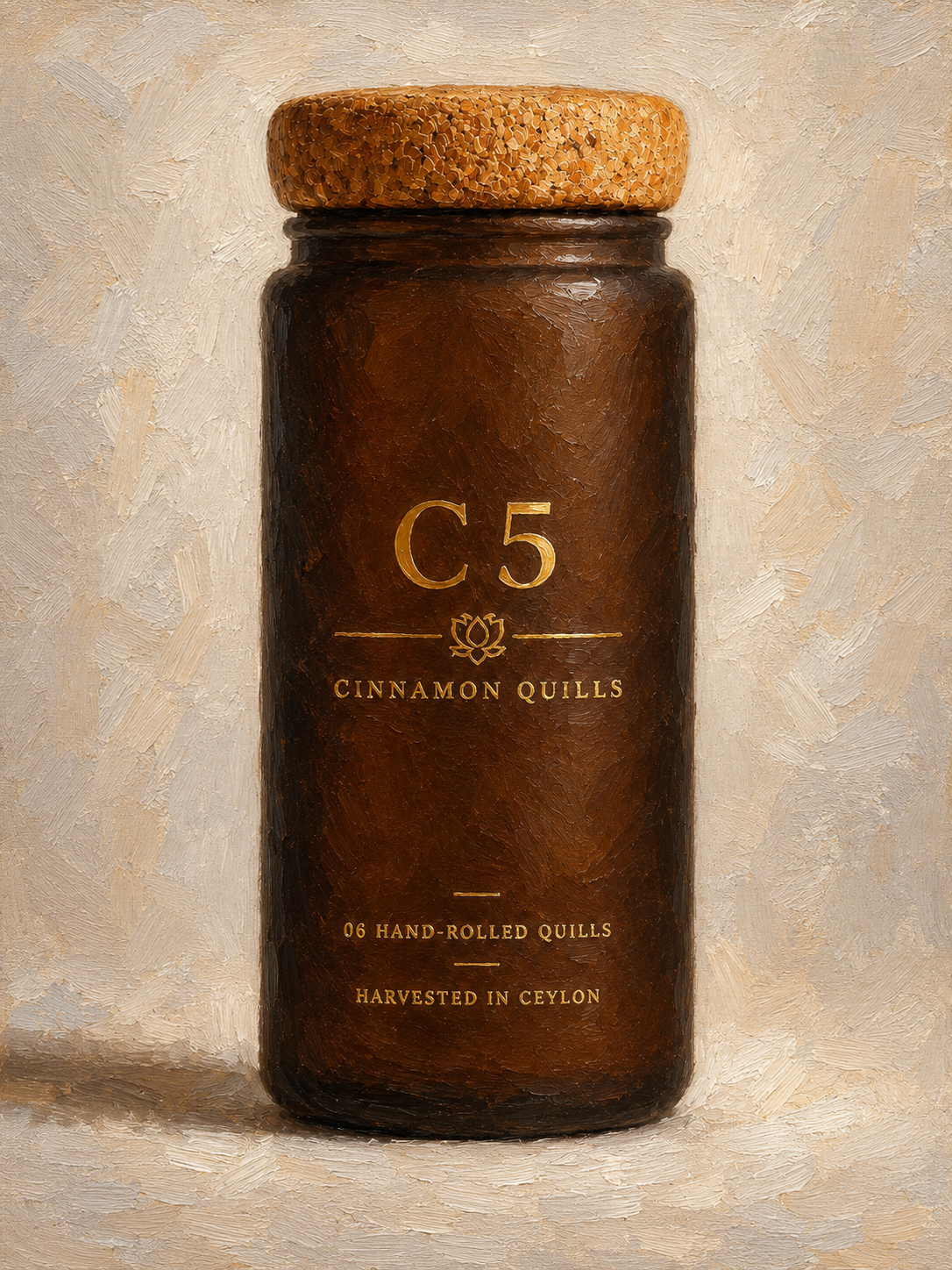 Study 02 · Continental quill
≤ 12 mm
A broader Continental-grade quill, selected for a fuller cinnamon presence and a form that carries beautifully through slow cooking and infusion.
Explore C5The wider family
Every name below still belongs to Cinnamomum verum. The variation is a grade: a measurable difference in quill diameter, how many standard 42-inch quills make one kilogram, and the permitted amount of natural surface foxing.
The smoother, finer family alongside Alba. Smaller diameters and a greater number of quills per kilogram indicate a more slender construction; Extra Special and Special distinguish the narrowest C5 forms.
| Variation | Maximum diameter | Minimum 42-inch quills / kg | Maximum foxing |
|---|---|---|---|
| C5 Extra Special | 8 mm | 33 | 10% |
| C5 Special | 10 mm | 30 | 10% |
| C5The Merchant’s selection | 12 mm | 27 | 15% |
| C4 | 16 mm | 22 | 15% |
| C3 | 18 mm | 20 | 20% |
Sri Lankan Ceylon cinnamon quills with a broader form and a higher allowance for foxing. M5 Special is the narrowest form in this family; M4 is the broadest.
| Variation | Maximum diameter | Minimum 42-inch quills / kg | Maximum foxing |
|---|---|---|---|
| M5 Special | 16 mm | 22 | 60% |
| M5 | 18 mm | 20 | 60% |
| M4 | 21 mm | 15 | 60% |
The broadest standard family of Sri Lankan Ceylon cinnamon quills, with fewer full-length quills required per kilogram and a progressively more rustic surface appearance from H1 through H3.
| Variation | Maximum diameter | Minimum 42-inch quills / kg | Maximum foxing |
|---|---|---|---|
| H1 | 23 mm | 10 | 25% |
| H2 Special | 25 mm | 9 | 40% |
| H2 | 32 mm | 7 | 55% |
| H3 | 38 mm | 6 | 65% |
How to read the reference: a lower diameter means a more slender quill; a higher quill count means more full-length quills are needed to make one kilogram. Foxing refers to reddish-brown surface patches and is an appearance allowance, not a separate species or flavour. Every family shown here is Sri Lankan Ceylon cinnamon.
Plate II · The layered quill
The hand behind the form
Ceylon cinnamon’s form is an act of skilled making. The outer bark is removed, the tender inner bark is loosened and peeled, and fine pieces are layered by hand into a long quill before shade drying. The result is light, intricate, and unmistakably different from a single thick curl of cassia.
The outer bark is carefully scraped away.
Fine inner bark is layered and rolled by hand.
The completed quill is slowly shade-dried.
Ceylon cinnamon & evidence
Ceylon cinnamon combines a characteristically low-coumarin profile with a distinctive aromatic chemistry and a long culinary record. Modern research is active, but its meaning depends upon the species, preparation and kind of study examined.
Official health sources distinguish Ceylon cinnamon from cassia by its naturally low or trace coumarin profile.
The bark contains cinnamaldehyde and a wider company of aromatic and polyphenolic compounds. Their proportions vary with the plant material and preparation.
Clinical studies have examined glucose and other metabolic markers, but species, preparations and results differ. The wider evidence is not yet conclusive.
A recent trial reported encouraging results from a defined Ceylon cinnamon extract. An extract studied under trial conditions is not the same as a culinary quill.
Research into memory and learning is led chiefly by laboratory and animal studies; human evidence remains limited.
Antioxidant, antimicrobial and inflammatory pathways are studied in cells and experimental models. Such findings do not by themselves establish an effect from ordinary food use.
Cinnamon has long appeared in food and traditional preparations. That history is culturally significant, though distinct from modern clinical evidence.
Ceylon cinnamon’s gentle sweetness and lifted aroma suit drinks, fruit, grains, pâtisserie and savoury cooking.
Verified species and origin allow Ceylon cinnamon to be discussed precisely, without turning a culinary ingredient into a medical promise.
The full research note separates established composition, human studies, experimental work and the historical record, with the sources placed beside the claims they support.
Examine the evidence
Verified by Serendib Authenticate™
The Merchant’s cinnamon is supported by a documented standard designed to connect what is stated on the page with what is presented in the pack.